
Reduced tillage can be a good strategy for improving soil health and preserving its microbial activity. An organic farm protects biodiversity and minimizes pollution by completely avoiding environmentally harmful chemicals. Can the benefits of conservation agriculture and organic agriculture be combined?
In this course, you will learn about:
Many farms are putting the plough on the shelf
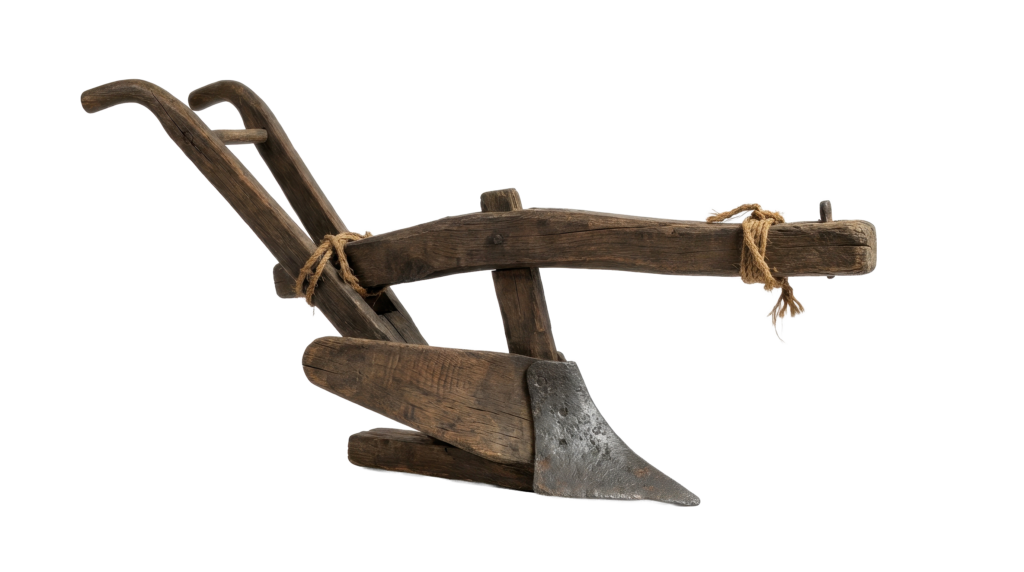
In many ways, the plough has been the starting point not only of modern agriculture but of how we have built small societies. The wheeled plough reached Denmark from the Middle East in the early Middle Ages (around the year 1100), and it was truly revolutionary.
The plough was designed with a coulter (a long iron) to cut a deep vertical furrow, a ploughshare to loosen the soil horizontally, and a mouldboard to turn over partially decomposed plant residues rich in nutrients. At the front were wheels pulled by strong animals such as oxen.
The machine answered one of the most pressing questions of the time
How Denmark and its neighboring countries could supply a growing population with enough food and avoid large-scale migrations. It made ploughing easier and faster (previously done by hand) and allowed manure to be incorporated into the soil. As a result, farmers suddenly achieved significantly higher yields on the same area of land.
Since a wheeled plough and the animals required to pull it were expensive investments, several landowners joined forces. This led to the formation of many of the small village communities we know today—some of which are now said to be in crisis due to increasing urbanization.
Fast forward to 2025, and we see a new farming paradigm. Many farms now practice no-till farming, where the soil is kept covered and disturbed as little as possible. They aim to stop using the plough altogether. The Danish Association for Reduced Tillage (FRDK) estimates that 30% of Denmark’s agricultural land is now cultivated either without ploughing or as reduced tillage systems.
Niels Mamsen from Øster Allé near Rødding in Southern Jutland is one of the farmers transitioning to this system. He has become more curious about how soil develops dynamically when it is disturbed less. For example, it has become easier to drive on the fields, and the soil no longer sticks to the wheels as much.
The reason I want to move away from the plough is the unnecessary energy consumption,
It is important for him to maintain a diverse crop rotation with seven different crops depending on the year, and he also grows grass and clover alongside several main crops.
However, Niels Mamsen still uses the plough to a limited extent, mainly because he grows potatoes, which do not perform well on a hard soil and are more susceptible to plant diseases.
Environmental benefits of reduced tillage
Reducing soil cultivation has many environmental advantages.
Frequent and deep ploughing increases oxygen levels in the soil, which can accelerate microbial decomposition of organic matter. If the turnover of organic material is too rapid, it may increase mineralization rates and potentially lead to more CO₂ being released into the atmosphere. This is especially the case if the loss of organic matter is not balanced by sufficient organic inputs.
It can also increase the likelihood of soils being bare for extended periods, which may reduce carbon sequestration through photosynthesis and limit carbon storage in roots and plant biomass.
In no-till systems, plant residues are left on the field. These residues protect against wind, rain, and erosion.
Combined with larger root systems, plant residues create better conditions for earthworms, fungi, and bacteria, leading to a healthier and more porous soil structure. This improves water infiltration, reducing surface runoff and allowing more water to enter groundwater systems.
On low-lying and former peat soils, drainage may be necessary for cultivation—but this can also lead to oxidation of soil carbon which is then released as CO2 if the soil is disturbed too much. Reduced tillage and cover crops can make a major difference here.
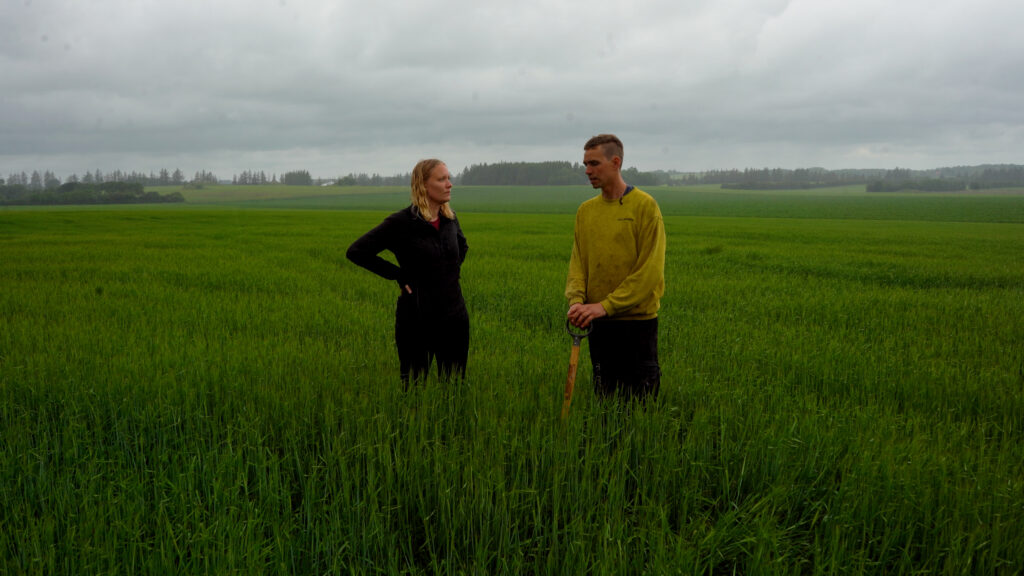
Niels Mamsen works with no-till farming and a diverse crop rotation to improve soil structure and reduce energy consumption. Photo: Didier Larsen
In summary, less soil disturbance allows natural processes to work more effectively. This results in lower CO₂ emissions, improved soil fertility, and more above and below ground biological activity.
No-till farming can also enhance biodiversity by preserving habitats for soil organisms like earthworms and insects that thrive in undisturbed soil.
Minimal tillage aims to rebuild soil
Minimal tillage and no-till farming are part of the approach known internationally as “conservation agriculture (CA).”
This farming philosophy views soil as a resource that must be both used and protected. The goal is to create healthier, more climate-resilient, and biologically active soil by reducing practices that increase CO₂ emissions and deplete soil carbon.
Conservation agriculture typically focuses on three main principles:
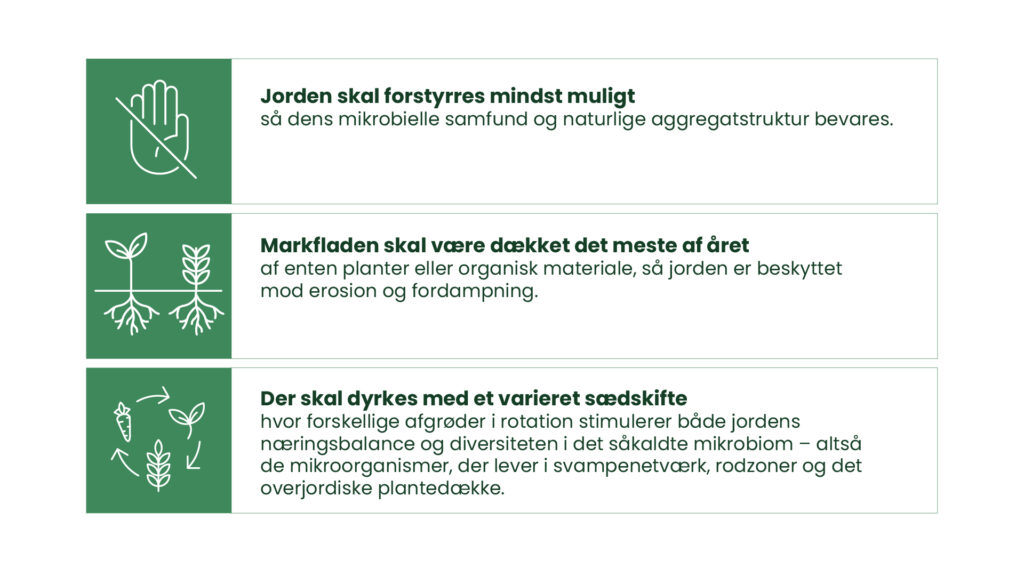
- Minimize soil disturbance to preserve microbial communities and aggregate stability.
- Keep the soil covered with plants or organic material most of the year to avoid erosion and evaporation.
- Use diverse crop rotations to improve the nutrient balance of the soil and increase microbial diversity.
However, there is no fixed formula, and practices must be adapted to local conditions. The three principles are meant to ensure that the farmer does not remove more organic material than what is added.
Taking the plough off the production changes not just field operations but the entire logic of seedbed preparation. The purpose of the plough is to effectively turn and homogenize soil. Without soil inversion and traditional harrowing, seeding equipment must work precisely in firm, residue-covered soil. This often requires advanced and expensive machinery, such as direct seeding or strip-till systems.
Direct seeding requires equipment capable of placing seeds accurately in narrow furrows without disturbing surrounding soil. Strip-till follows a similar concept but loosens soil only in narrow strips where crops are planted.
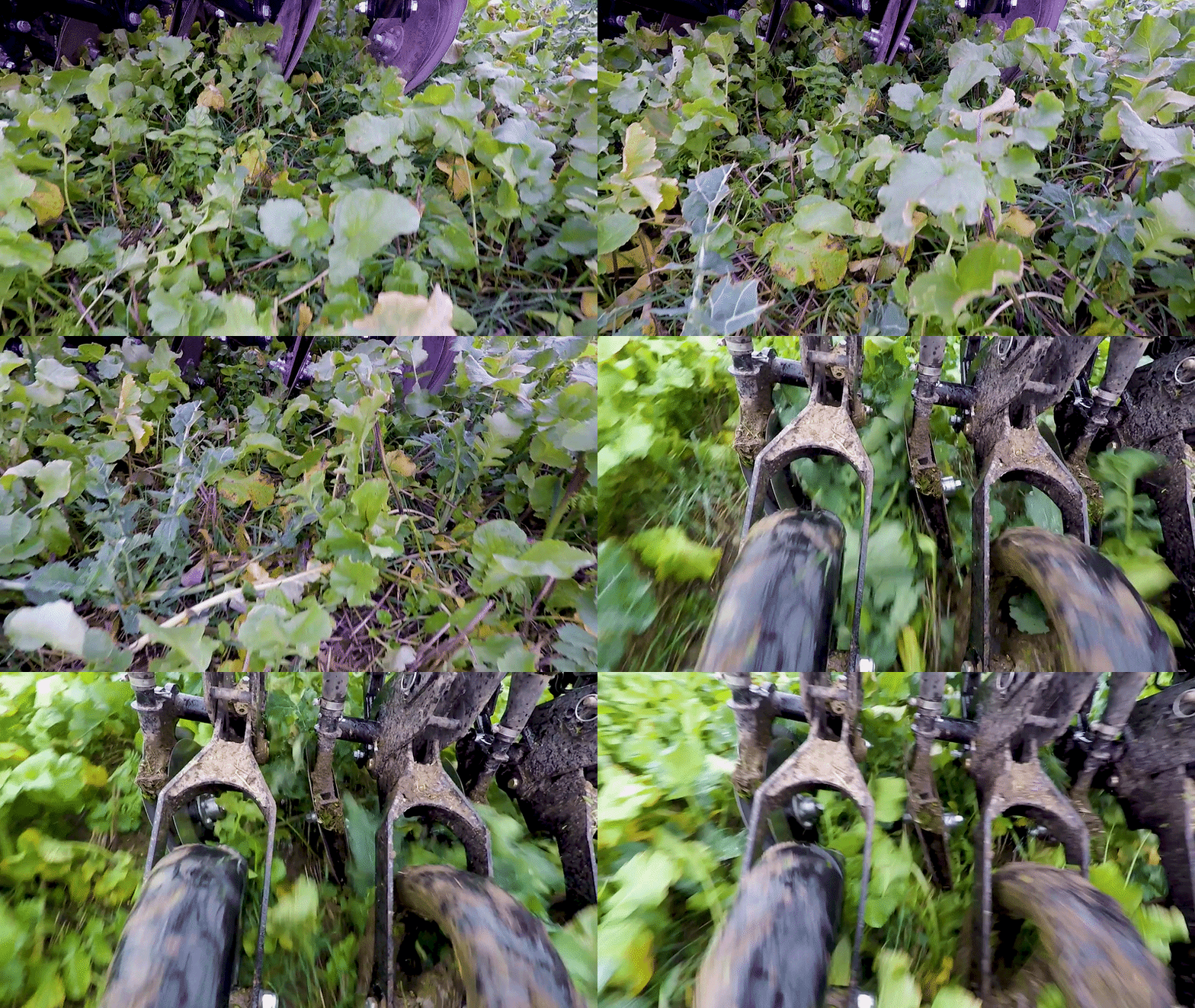
The Weaving GD600T in action during sowing in the field. Source: Søren Ilsøe
If direct seeding is not possible due to compacted soil, shallow surface cultivation (5–7 cm) may be used to improve seedbed conditions. The shallow tillage depth can improve soil contact in the seedbed and increase the chances of crop establishment, especially in fields with low porosity and poor load-bearing capacity, where roots and water have difficulty penetrating the soil. Mechanical tools such as disc harrows, rotary harrows, vibro cultivators, and rollers are commonly used to loosen only the topsoil.
Another establishment method is broadcast seeding, where the seeds are spread on top of the field’s plant cover using equipment typically used for slurry application, such as pneumatic seeders (a kind of drag hoses) or broadcast spreaders. The seeds are then covered with a thin layer of soil or organic material to ensure germination and protection during the early growth stage. This method is particularly chosen where the seedbed requires especially gentle preparation, without bringing the plough into use.
One of the biggest challenges in conservation agriculture—especially during the transition from conventional farming—is weeds, slugs, and pests.
The lack of deep soil inversion means that weed seeds are no longer buried, and certain pests can become more prevalent in the moist environment beneath the plant cover. Many farmers choose chemical solutions such as glyphosate-based products to create a cultivation window without competition from perennial weeds and aggressive annual weed species.
The major environmental drawback is therefore the reliance on synthetic plant protection products in systems that do not ensure strong, preventive biological strategies.
In the long term, more no-till farms are attempting to reduce the need for chemicals through methods such as cover crops with weed-suppressing properties, mechanical strip-tillage combined with precision technology, and increased use of beneficial organisms, microbiological soil improvements, and careful management of crop canopy height and grazing pressure, where ruminants are integrated into the system.
However, these solutions require time, adaptation, and agronomic planning. This is why no-till farming is often described as a system with great potential, but also with a significant Achilles’ heel until biological mechanisms take over a larger share of regulation in the field.
Organic farming is based on natural recycling
Organic farmers base their practice on the natural recycling of nutrients and the enhancement of soil biota; consequently, they avoid both synthetic pesticides and artificial fertilizers
Modern organic farming as a formalized movement emerged in the early 20th century as a response to the industrialization of agriculture. The first formalized organic principles can be traced back to two movements in a European context:
A biodynamic movement, founded in 1924 through a series of lectures by Rudolf Steiner in Germany and Poland, and a more agronomically oriented approach to organic farming in England. The latter developed in the 1930s and 1940s with key figures such as Sir Albert Howard, who in 1940 published the book An Agricultural Testament.
This became one of the most important early references for organic farming, focusing on compost, soil fertility, and nature’s own cycles.
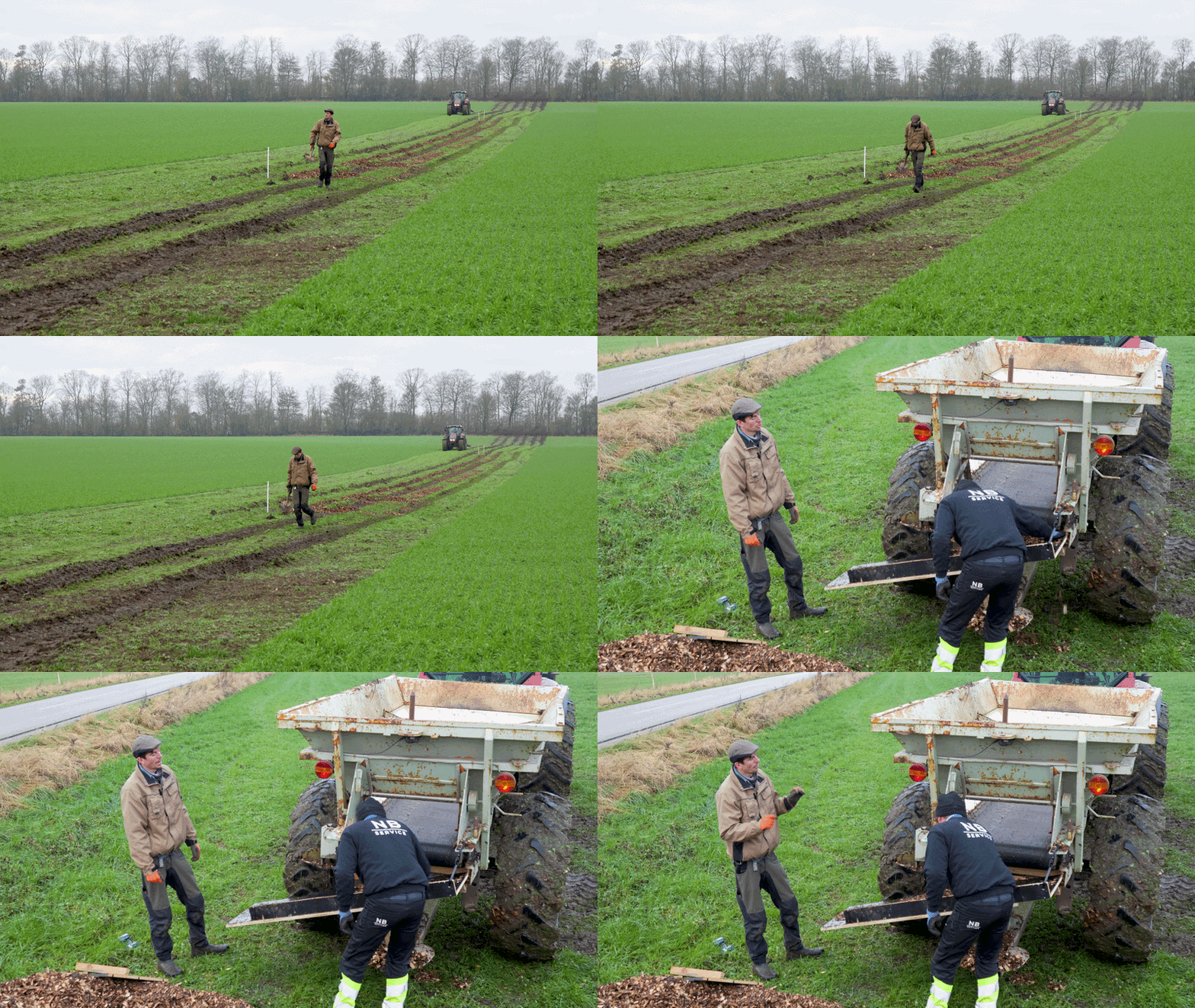
In Denmark, the organic movement truly began to take hold in the 1970s through pioneering farmers and organizations, and in 1987 Denmark became the first country in the world to introduce state regulations and a national, controlled organic label subject to legislation and certification.
The red-and-white “Ø-label” thus became the first official national organic certification.
The term “organic” originally refers to “the study of nature’s household” and in agriculture it is about imitating and supporting natural cycles. In an organic system, nutrients are not supplied as synthetic mineral fertilizers.
Organic farms therefore use livestock manure, green manure, cover crops compost, and plant residues as key nutrient and soil improvement strategies. These inputs decompose slowly and become part of the soil food web, where nutrients are released over time rather than being quickly leached. The addition of organic matter also increases the soil’s carbon pool.
In a well-functioning organic system, the soil acts as both a reservoir and an engine for nutrients: plants absorb, leave behind, and return nutrients through roots and biomass, while microorganisms transform them and make them available again for the next crop—without the use of synthetic chemicals.
Organic farming has many well-documented advantages. However, there are also several agronomic challenges. One example is weeds, since synthetic herbicides are not permitted.
All weed control must therefore be mechanical or preventive. This requires multiple passes with equipment such as inter-row cultivators, tine weeders, and harrows, and often within a narrower establishment window, where timing is crucial for success. Overall, this increases labor requirements, fuel costs, and may increase the risk of soil compaction, if operations are not well-timed or adapted to soil conditions (eg. wet or clay-rich fields). Not to mention that surface disturbance can reduce carbon sequestration potential over time and damage earthworm channels and fungal mycelium, which are otherwise part of the natural solutions on which organic farming relies.
Diseases and pests also pose a significant challenge in organic farming.
Because chemical pesticides are prohibited, crop protection must rely on plant health, resistant varieties, and ecosystem functions such as beneficial organisms and crop rotation. In wet years, fungal diseases such as potato blight can be difficult to control, and pests such as aphids, and cabbage root fly can cause significant yield losses if prevention fails. Slugs can become a problem in fields with high levels of organic matter or cover crops, as these environments provide shelter and moist conditions for slugs to thrive in.
Nutrient supply can be a third major limitation in certain organic systems.
Although organic farmers work with manure, organic fertilizers and recycling through legumes, nitrogen can be a scarce resource during periods when mineralization is slow – especially in cold spring seasons or on sandy soils with low humus content.
In such cases, it can be difficult to match crop demand during rapid growth phases, and yields may fluctuate more than in systems with readily available mineral fertilizers. Phosphorus and potassium may also be limiting if the farm does not have access to sufficient livestock manure or high-quality compost inputs.
Million-dollar question: How do we build a bridge?
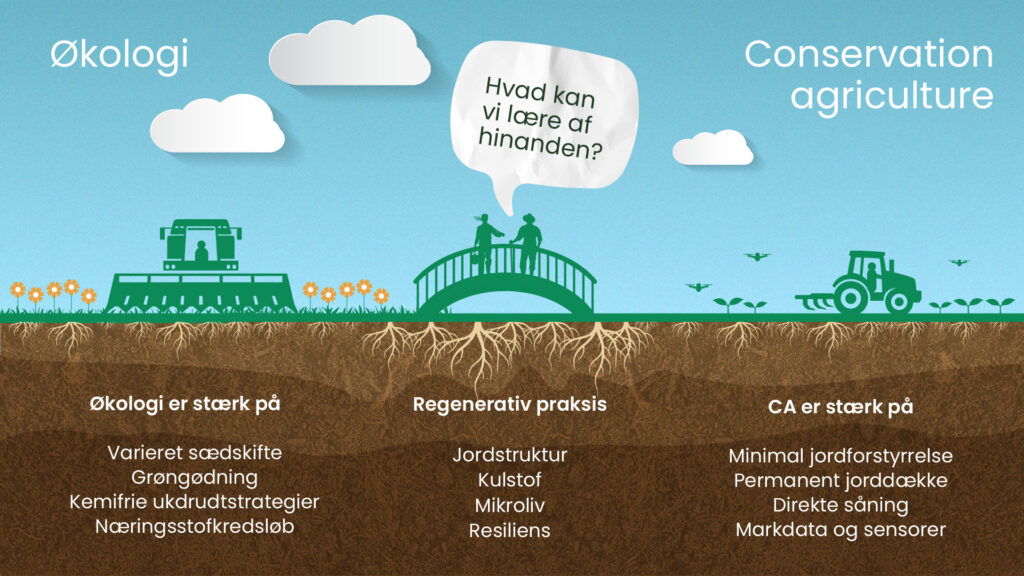
Discussions about the “right way” to practice environmentally friendly agriculture can quickly become very black and white. Either one swears by organic farming, or no-till methods are seen as the only correct way to grow crops.
In reality, however, the different approaches can and should learn from each other to achieve better soil health. The biggest barrier to bridging organic farming and conservation agriculture is often culture and habits rather than professional disagreement.
Farmers tend to strongly identify with a particular farming system, and debates about chemicals, technology, and tillage quickly become value-laden. The systems also have practical differences that can create barriers: organic farmers are not allowed to use synthetic plant protection products, while many no-till crop producers, especially in the early years, have relied on chemicals to manage weeds and pests.
At the same time, conservation agriculture often works with data, sensors, and field technology, while organic systems have traditionally placed less emphasis on advanced digital tools. This can create perceptions that one system is “high-tech” and the other “low-tech.”
In reality, modern farms in both approaches are increasingly more nuanced. From a professional standpoint, they have much to learn from each other.
Conservation agriculture is strong in methods that protect the soil from deep disturbance and in tools for effectively measuring and monitoring the field. Techniques such as direct seeding, permanent soil cover, management practices that reduce erosion, and measurements of soil load-bearing capacity, carbon storage, infiltration, and root development are areas where this approach has developed solid field- and research-based knowledge.
Organic farmers, on the other hand, are strong in a holistic view of soil fertility and in developing chemical-free strategies. They have demonstrated how diverse crop rotations, the use of green manure, beneficial organisms, natural composting, microbial processes, and the slow release of organic fertilizers can drive nutrient cycling while building humus and soil biological processes.
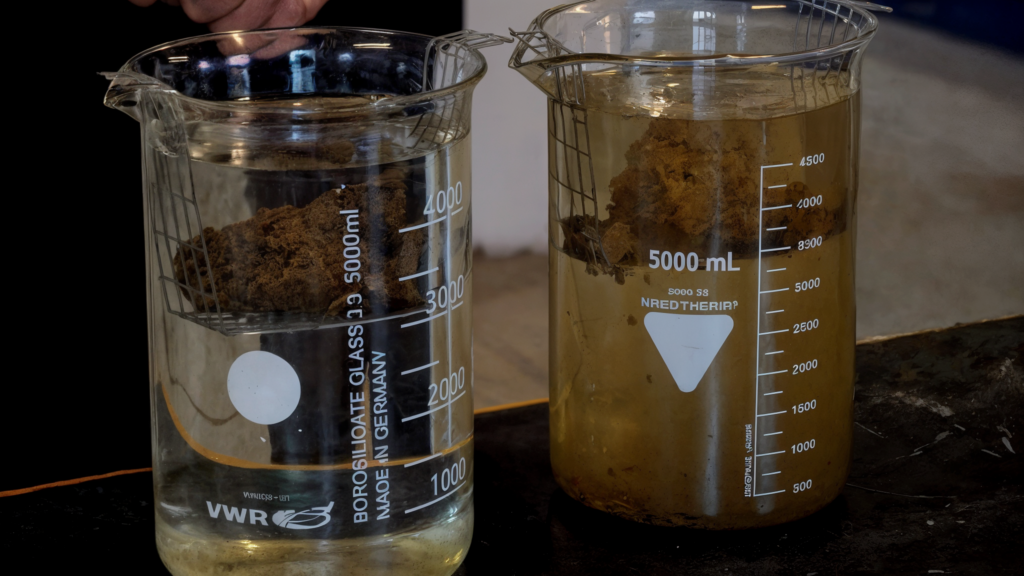
This experience in keeping systems running without synthetic chemicals is crucial knowledge for the future of no-till farming, which aims to reduce dependence on pesticides.
Both approaches can support each other in practice. Organic farms can inspire chemical-free weed and pest management strategies, which can also be tested and documented using conservation agriculture measurement methods. Conversely, no-till farmers can demonstrate how soil structure can be protected with fewer deep field operations, and how field data and technology can be used responsibly to support biology rather than replace it.
The bridge is built when methods are shared and tested together. Ultimately, the goal is the same: to create a resilient, low-emission production system that nourishes the population while regenerating the very soil it depends on.